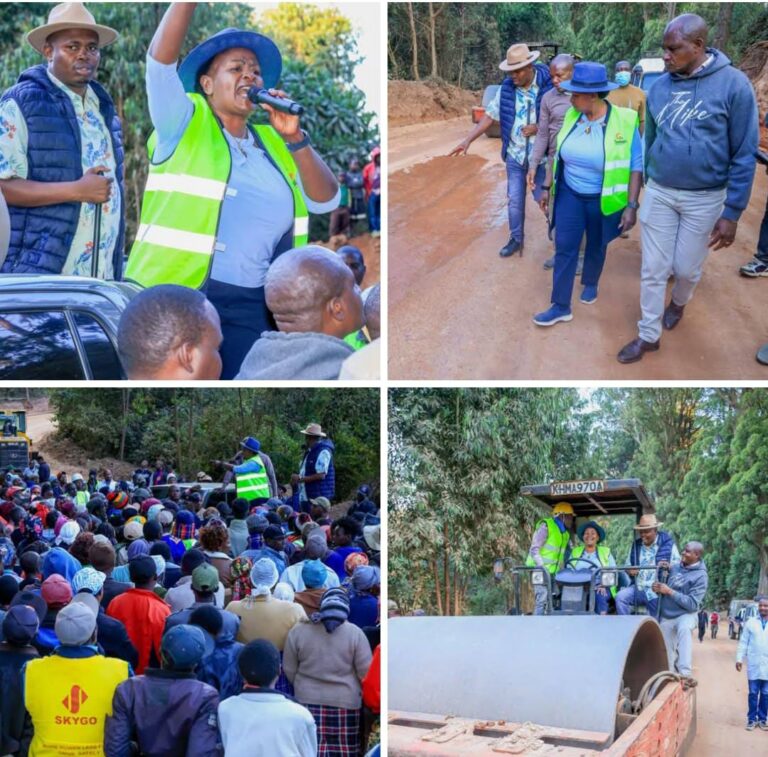

Picture: Machakos governor wavinya Ndeti
At a time when Kenya’s healthcare system is buckling under the weight of nationwide strikes, shuttered clinics, and frustrated patients, Machakos County is telling a radically different story one of stability, expansion, and political will. While clinical officers across the country down their tools in protest, those in Machakos are still on duty, still treating patients, still keeping the system alive. That is not an accident. It is governance.

“Machakos clinical officers are the only ones working in Kenya while their colleagues in other counties are on a national strike, as their demands were largely met by Governor Wavinya Ndeti’s administration. We appreciate our governor for prioritizing the healthcare system,” says County Executive Committee Member for Health, Justus Kasivu. In a political climate where lip service often replaces delivery, Machakos stands out as a county where promises were translated into policy and policy into pay slips, equipment, and functioning hospitals.

Governor Wavinya Ndeti’s three years in office have been marked by a quiet but firm rebellion against the culture of neglect that has long plagued devolved healthcare. Instead of blaming Nairobi, budget constraints, or unions, her administration chose a more radical path: listening, investing, and acting. The result? Industrial harmony in a sector defined elsewhere by chaos.

But labor peace is only one chapter of the story. Infrastructure tells the rest. When Wavinya assumed office, entire sub-counties were underserved to the point of indignity. “When Governor Wavinya took office, sub-counties such as Mavoko had only eight healthcare facilities, and within three years, the number has increased to sixteen,” Kasivu notes. In a country where leaders often recycle groundbreakings for political mileage, Machakos actually doubled its facilities brick by brick, ward by ward.

And then there is the issue that cripples hospitals more than strikes ever could: drugs. Empty shelves have become a national symbol of healthcare failure. Machakos refused that narrative. “Our governor procures drugs for our hospitals four times per year, which is why Machakos County health facilities have no drug shortages,” Kasivu adds. Regular procurement is not glamorous politics but it is life-saving politics.

This is where Governor Wavinya’s administration lands its most potent political punch. While other counties manage healthcare by press release, Machakos manages it by supply chain. While others explain why systems collapsed, Machakos demonstrates how systems can work. The contrast is uncomfortable for critics and instructive for the nation.

Three years on, Machakos has become a case study in what happens when leadership treats healthcare not as a campaign slogan, but as a core obligation. Clinics are open. Workers are present. Drugs are available. And patients, quietly but decisively, are better served.

In an era of noise, Governor Wavinya Ndeti’s healthcare record speaks through results. And in Kenyan politics, that may be the most electrifying statement of all.
About The Author